Showing posts with label teshuva. Show all posts
Showing posts with label teshuva. Show all posts
Friday, January 9, 2009
Always a Jew
Inside every Jew is a spark of G-dliness, a pintele yid, a Jewish soul that yearns to reconnect with HaShem. Even the most distant Jew longs to come back to his people. The Jewish spark cannot be erased or destroyed but is eternal. Even if a Jew, G-d forbid, gets baptized, moves to India and lives in an ashram or joins a cult, he remains a Jew.
May HaShem merit that every single lost Jew return home.

Wednesday, December 17, 2008
Don't Let the Light Go Out
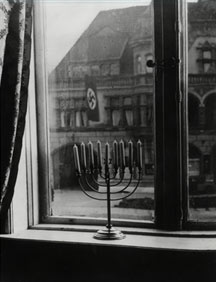
Don't let the light go out. This light has seen mighty empires comes and go. It saw the Greece rise up and conquer world, only to fade away. This light saw the Roman empire grown and collapse. It saw mighty rulers, fearless generals and mighty warriors disappear, without a trace. Yet the light remains.
Don't let the light go out. This light overcame the forces of Hellenism and hedonism. It shone through the darkness of immorality and vanity. It gave guidance and meaning to thousands of generations of Jews who resisted assimilation, who refused to forsake their Torah and their G-d. This light illuminated the secularism that blinded many and sought to lead the Jewish people astray. Philosophies, ideologies and 'isms' are relegated to the dustbin of history, yet the light remains.
Don't let the light go out. It was tended and nurtured lovingly by Jews throughout the ages, often at the risk of their lives. It was protected and treasured despite pain, despite poverty, despite hardship and persecution. Downtrodden, humiliated and weak, the light gave us strength. When there was no hope, the light promised us a better future.
Don't let the light go out. It shone brightly in Morocco and Poland, in Baghdad and Paris. It illuminated the streets of Minsk and Pinsk, Istanbul and Fez, Shanghai and Rome. Our enemies could not extinguish it. Withstanding the cross and the crescent, crusaders and mujahadeen, the light still burns. Under the windows of popes and kings, emperors and sultans, shas and dukes, the light proclaimed that we were still here.
Don't let the light go out. It was lit hidden in cellars, for fear of the Inquisitors racks. It was lit in ghettos and camps, in the shadow of the gas chambers and crematorium. It was lit in the freezing gulag's, the punishment for wishing to return home. It burnt long after Crusaders and Almohads, revolutionaries and fascists, Nazis and Communists, disappeared from the earth and will burn long after the suicide bomber, "holy warrior" and jihadist terrorist. For the miracles performed for us in those days, in this time.
Don't let the light go out. The light that was kindled at the rededication of the Second Temple, and will be kindled at the dedication of the Third Temple, may it be soon. The light that has returned home after two thousands years of exile, the light that blossoms in its holy land. The light that was shot out in Mumbai, massacred on the streets on Jerusalem, in pizzerias and cafes, synagogues and study halls. The light that is threatened by assimilation and ignorance. The light that has seen history, yet still shines. Don't let the light go out.
Chag Chanukkah Sameach!

Cross-posted from For Zion's Sake
Tuesday, October 7, 2008
Remember who you are
On the eve of Yom Kippur, the holiest day in the Jewish calendar, 'Jews for Jesus' is getting more and more aggressive in the drive to convert Jews to Christianity. According to internal memos from the proselytizing organization, missionaries are being directed to the Northern town of Qiryat Shemona. The memo goes on to boast that the missionaries "handed out 21,700 gospel tracts" and "have contact information of 995 Jewish people who told us that they want to know more about Jesus." 'Jews for Jesus' has about 2000 missionaries active in Israel. Just days ago, a radio ad by 'Jews for Jesus' in the Northern Galilee was blasted from the radio after protests. Irate listeners found that the message was far too aggressive in its call for Jews to accept Christianity.
'Jews for Jesus' is but one of close to a thousand missionary groups active in Israel. In the coming weeks, tens of thousands of Christian missionaries are expected to descend on Jerusalem for the annual Feast of Tabernacles Parade. The ICEJ, organizers of this mega-missionary event, claim that "the word of G-d (read 'Jesus') is preached nightly and is central to the evening meetings." Christians are entering a fever pitch, trying to get as many Jews as possible to become Christian. Sadly, many Jews who are unaffiliated, secular or have little knowledge of Judaism are succeptible to their tactics. These Messianic groups often claim that they represent authentic Judaism, albeit one that believes in Jesus as messiah. They believe themselves to be restoring the true message of the Torah.
This week's parsha of Haazinu tells us how to recognize authentic Judaism and to be able to spot out pseudo-Judaism. With many groups and individuals around the world passing off a fake, corrupted false Judaism as the real deal, this message is essential. "Remember the days of old, consider the years of many generations; ask thy father, and he will declare unto thee, thine elders, and they will tell thee." (Deut. 32:7) If a Jew is confused as to what is kosher and what is treif, he need only go back to his roots, to his traditions, to his parents, grandparents and great-grandparents. He must ask himself, "did my great-grandfather worship like this?" The Torah is clear about what happens when the Jews stray from the path of their ancestors. "They roused Him to jealousy with strange gods, with abominations did they provoke Him. They sacrificed unto demons, no-gods, gods that they knew not, new gods that came up of late, which your fathers dreaded not." (Deut. 32:16-17) Clearly, the Torah places emphasis on the fact that the Jews went after new gods which were recently invented. This is critical today. When confronted by missionaries who preach that Jews must believe in Jesus or be condemned to an eternity of hellfire, every Jew must take the Torah's warning to heart. Would his great-grandfather with his long beard and black hat sitting in a shtetl in the Pale of Settlement recognize his faith? His grandfather in the mellahs of Morocco? His ancestors in the judeiriahs of Spain? Would any of them recognize Jesus or feel comfortable at a Messianic service? Every Jew must answer back that Jesus and the Christian theology is 'a new god that came up of late, which our fathers dreaded not'. If a Messianic were to stand in a room with a Rambam, a Rashi, a Rabbi Akivah, a Baal Shem Tov, a Vilna Gaon, a Ramban, or even a Moshe Rabeinu, he would not fit in. They would not see any resemblance between their Judaism and the counterfeit junk hawked by the apostate.
The Kol Nidrei prayer on Yom Kippur night awakens within every Jew the desire to come home to HaShem, to do teshuva and to be faithful to what they really are. It gained special significance during the time of the Spanish Inquisition when Jews were forced on pain of death to take vows and abandon Judaism. Kol Nidrei became their way of renouncing any vows they were forced to take by the Church. The knew at heart that they were Jews.
When the American forces reached the Buchenwald death camp, they opened the gates of the camp wide and liberated the inmates. The prisoners left the camp and dispersed, each going his own way. Reb Leizer of Czen-sto-chow was one of the freed inmates. At the gate he paused. "Where? Where should I go?" He knew that most everyone in his family had been murdered. They came with him to the camp, and he saw them led to the crematoria.
Only one hope remained. As all of the people of the town were being herded together for shipment to the death camp, he was able to smuggle his little son Yossele out of the ghetto and into the "Aryan" section of town. "Who knows?" said Reb Leizer to himself, "Perhaps the child is still alive, still alive." He would go looking for him. But how, where?
Reb Leizer went back to Czen-sto-chow. He wandered about the streets and the marketplaces, and every time he saw a boy about Yossele's age, he would stop and look at him closely. Perhaps this was his son. He began asking guardedly, "Did anybody know the Leizer family, or what happened to them?" People told him that the family had left the town in the death trains, everyone except the little boy, whom someone took to the monastery. Which monastery? No one knew. "If my son is alive," decided Reb Leizer, "I will save him."
He went from one monastery to the next, inquiring about his son. The monks denied ever seeing him. No Jewish child, they claimed, had ever crossed the threshold of a monastery. Reb Leizer knew they were lying, but what could he do? He went and bought an organ. Among the tunes he put into it was the melody of Kol Nidre. Reb Leizer strapped the organ to his back and began making the rounds of the streets and yards from village to village, from one monastery to the next. Wherever he saw children playing, he would set the organ down on its legs and begin turning the handle. Immediately he would be surrounded by children. As the children stood listening, he would watch their faces closely – particularly when the organ ground out the tune of Kol Nidre.
Did any child's face change or show some emotion – fear, perhaps, or sadness and longing? Whenever he saw a child stir as the Kol Nidre melody was played, he knew that child was Jewish. As all the other children scattered, he would follow this child, talk to him, and tell him that the war was over and he could go back to his own people. Though unable to find Yossele, history records that he was able to save scores of Jewish children and restore them to their faith, with possibly the most moving tune of our faith.
Reb Leizer took his organ and buried it in the ruins of a destroyed synagogue and he went to Israel. People from that district of Poland say that at times they hear the tunes of a hand organ coming out of the earth, and among the tunes is the melody of Kol Nidre.
On the eve of Yom Kippur, I pray that HaShem merit that the beautiful and moving melody of Kol Nidrei stir the heart of every single Jew to return to his Father in Heaven. Before we begin the Kol Nidrei service, we say that by the permission of the Heavenly and earthly courts, it is permissible to pray with sinners and transgressors. On Yom Kippur, all Jews are welcome before HaShem. We must remember who we really are and not let any dastardly peddler of false beliefs lead us astray. May every single lost Jewish child return home. Gmar chatima tovah.
Saturday, October 4, 2008
Having Your Jesus and Eating it Too
Tallis, tfillin, shabbos, Torah classes, sukkot, Jewish stars, Hebrew... must be Jewish. A newcomer to a Messianic congregation, upon seeing the Jewish symbols and paraphernalia, often concludes that this is the real deal, that this is authentic Judaism. When called out on the contradictions between Judaism and Christianity, Messianics will quickly point to the fact that they keep the mitzvot. Indignant at being called a Christian, they reply that they keep kosher, that they keep shabbat, light shabbos candles, etc.
The Messianic movement emerged 30-40 years ago, as sort of a half-way house for Jews into Evangelical Christianity. Frustrated at the low level of Jewish conversion to Christianity, fundamentalist Christians sought a way to make Christianity more palatable to Jews. Well-aware of the bloody history of Judeo-Christian relations and the deep distrust many Jews feel towards Christians, Evangelicals tried to find a way to make their Christianity feel less "Christian". The crucifix, long associated with persecution and oppression, had to go, as did " Jesus Christ", pastor, altar, Sunday morning mass and all of the goyish accoutrement often associated with church. In its place came Jewish stars, a newly Hebrew "Yeshua HaMoshiach", rabbis, and shabbos morning services. Dressing up their church- I mean synagogue- with Jewish symbols, the Hebrew-Christian movement set out to teach Jews of the "Jewish Jesus". No longer was he a WASP or a Catholic priest, but a good yiddishe bochur, a nice Jewish boy who went to shul, kept the Torah and was 100% kosher. Certainly no Jew could refuse such a messiah.
The result of this emerging Messianic movement was a Christianity that gave up none of its fundamental theology that set it apart from Judaism, but that used Jewish symbols and rituals. Messianics don't keep Christmas as they feel that it is a pagan holiday, yet they still believe in a virgin birth which they celebrate on Shavuot. The same goes for Easter; despite not celebrating what they see as pagan, they still believe that a demigod dying for their sins, and commemorate this event during Pesach. This was a win-win situation for Evangelical Christian: they didn't have to give up on any of their fundamental beliefs and were able to, at the same time, take part in Jewish rituals and observances. What resulted was a primitive form of Christianity that hid itself behind Jewish labels.
The first commandment that the nation of Israel heard directly from G-d's mouth at Sinai was "You shall have no other gods before Me". Only from this fundamental basis can all other commandments proceed. The essence of Judaism is that there is One G-d, One and Indivisible, and none besides Him. Without this, there is no Judaism.
A careful examination of Messianic groups reveals that they fail on this cardinal principle, making any claims of authentic Jewish expression irrelevant.
Jews for Jesus, an organization aiming at converting Jews to Christianity while at the same day observing the mitzvot, states the following as its central tenets: "We believe in one sovereign God, existing in three persons: Father, Son and Holy Spirit, perfect in holiness, infinite in wisdom, unbounded in power and measureless in love; that God is the source of all creation and that through the immediate exercise of His power all things came into being... We believe that Jesus the Messiah was eternally pre-existent and is co-equal with God the Father; that He took on Himself the nature of man through the virgin birth so that He possesses both divine and human natures." Whether or not they keep shabbat matters little. At heart, the theology of Jews for Jesus is identical to the theology of Baptists and Evangelical Christians.
Sid Roth's Messianic Vision's statements of faith reveal a theology more at place at a Baptist revival meeting, than in a synagogue or yeshiva. Same thing for the Chosen People Ministry, whose beliefs are at odds with Jewish beliefs. All Messianic organizations, while pretending to be authentically Jewish, are hostile to traditional and authentic Jewish theology. Simply wrapping a cross in a tallis does not make it Jewish. If something walks like a duck and quacks like a duck, then it is reasonable to assume that it is a duck. Messianic groups, while preaching adherence to the Torah, fail on the cardinal test of theology. In that realm, they are purely Christian groups, masquerading around with Jewish objects. One can dunk the New Testament in a mikveh and put a hechsher on it, but in the end, if it Jesus Christ to be Lord and Saviour, it ain't Jewish.
It is important to discuss Christian misuse of Jewish symbols. By keeping kosher, putting on tfillin and saying the Shmah all the while believing in Jesus, one does not endear themselves to G-d. Quite the opposite. G-d demands as a basis that we remember we should have no other gods before Him, and that besides Him there is no other. Anything else is spiritual adultery. Bowing before Jesus, praising him and calling him divine is adultery with HaShem. "I am the Lord, that is My name, and My glory will I not give to another. Neither My praise to graven images!" (Isaiah 42:8) G-d does not share His glory with anybody, certainly not Jesus. Keeping the mitzvot while worshipping idols only angers G-d. It can be compared to a wife who suspects that her husband is cheating on her and to placate her, he gives her jewelry, a car and other fancy gifts. Coming home with another woman's scent on his clothes, his diamond bracelets are meaningless. They only make the wife angrier at her husband's betrayal. Similarly, if someone lights shabbat candles in Jesus honour, G-d is infuriated at the desecration. It matters little if a person keep the entire 613 commandments scrupulously; he is cheating on the G-d of Israel who shares His with no one, and has no equal.
As Yom Kippur approaches, we must all do a cheshbon nefesh, a spiritual accounting and realize where we have come short. It is incumbent upon each and every person to do teshuva and to return to the One who created them. The first step is realizing who the Creator is and who He isn't - and He certainly is no man. "To whom shall you liken Me and make Me equal and compare Me that we may be alike?" (Isaiah 46:5) "I am the Lord your God, Who brought you out of Egypt. You shall acknowledge no god but Me, no savior except Me!" (Hosea 13:4)
To my readers, I wish you all a gmar chatima tovah.
Tuesday, September 23, 2008
Teshuva
This past motzaei shabbat (Saturday night), Ashkenazi Jews began reciting Selichot, special penitential prayers. Sephardic Jews have been reciting Selichot since the beginning of the month of Elul. The Selichot prayers beg G-d to have mercy on His people, to forgive us our sins, and to let us do complete teshuva. They are focused on the Thirteen Divine Attributes of Mercy which G-d revealed to Moses after the Sin of the Golden Calf. They beseech G-d's compassion that He may overlook our sins and to forgive us.
From the beginning of Elul, through Rosh HaShana and the Ten Days of Teshuva, until Yom Kippur, each Jew goes through an intense period of soul-searching. This period of the Yamim Noraim (Days of Awe) is devoted to doing teshuva, repentance. The Rambam writes in his Hilchot Teshuva (2:6) that "repentance and outcry [in prayer] are always proper, but between Rosh HaShanah and Yom Kippur they are especially proper and are answered immediately, as it is written (Isaiah 55:6): 'Seek G-d when He is found, called upon Him when He is near.'"
When the Temple in Jerusalem stood, various offerings were sacrificed to G-d. There were special offerings for each day and festival. An elaborate sacrificial system existed. On Yom Kippur, the Torah commands for the following offering: "Also on the tenth day of this seventh month there shall be a day of atonement; it shall be a holy gathering to you; and you shall afflict your souls, and offer an offering made by fire to the Lord. [28] And you shall do no work in that same day; for it is a day of atonement, to make an atonement for you before the Lord your G-d." (Leviticus 23:27) However, the essence of the atonement was not the sacrifice itself, but the 'affliction of our souls' ie. fasting and repentance. When G-d decided to overturn His decree against the people of Ninveh, the Torah records that G-d saw their repentance and how they changed their actions. The essence is not in the physical act of fasting, crying, slaughtering an animal but rather in repenting from our sins, confessing our deeds and turning from them.
For close to 2000 years, the Jewish people have been bereft of a Temple in which to offer sacrifices to HaShem. What do we do? Are we cut off from repenting for lack of a Temple? The Prophet Hosea (14:3) revealed to the People of Israel take G-d accepts our prayers in the place of animal sacrifice. "Take with you words, and return unto the LORD; say unto Him: 'Forgive all iniquity, and accept that which is good; so will we render for bullocks the offering of our lips." G-d does not desire animal sacrifice but rather sincere teshuva.
"Let the wicked forsake his way, and the unrighteous man his thoughts, and let him return to God, and He will have compassion on him; and to our God. For He will abundantly pardon." (Isaiah 55:7)
"And if My people who are called by My name humble themselves and pray, and seek My face and turn from their wicked ways, then I will hear from heaven, will forgive their sin, and will heal their land." (II Chronicles 7:14).
"But if the wicked man turns from all his sins which he has committed and observes all My statutes and practices justice and righteousness, he shall surely live; he shall not die. All his transgressions which he has committed will not be remembered against him; because of the righteousness which he has practiced he shall live...When a wicked man turns away from his wickedness which he has committed and practices justice and righteousness, he will save his life. Repent and turn away from all your transgressions, so that iniquity may not become a stumbling block to you (Ezekiel 18:21- 22,27,30).
"By loving kindness and truth iniquity is atoned for..." (Proverbs 16:6).
"If you return to God you will be restored; if you remove unrighteousness far from your tent...then you will delight in God..." (Job 22:23-27).
May G-d inscribe all of Am Yisrael in the book of Life, Happiness, Prosperity, Success, and Plenty. May Hashem accepts all our teshuva and cast away our sins. May 5769 be the year of the Complete and Final Redemption, amen.
Saturday, June 21, 2008
Leveling the Playing Field- # 2: Spiritual Death
Potential converts are often told that accepting Jesus is their only chance to avoid burning in hell for all of eternity. Belief in Jesus is saviour is a 'get out of hell free' card. Missionaries love to claim that Jews have 'nothing to lose and everything to gain' by accepting Jesus as their saviour.
To this, it is necessary to respond that if Jesus is not a deity, worshipping him as G-d constitutes idolatry. The punishment of an idolater is spiritual death, and being cut off forever from G-d in the World to Come, karet. "But the soul that sinneth high-handedly, whether he be home-born or a stranger, the same blasphemeth the LORD; and that soul shall be cut off from among his people. Because he hath despised the word of the LORD, and hath broken His commandment; that soul shall utterly be cut off, his iniquity shall be upon him." (Num. 15:30-31). Idolatry is one of the the three cardinal sins which a Jew must give his life before committing. Indeed, throughout the ages, Jews have prefered death than baptism. During the Crusades, tens of communities were destroyed and thousands of Jews were massacred, yet only a few individuals accepted Christianity. Most sang the Shemah, the Jewish testament to G-d's Unity, before being slaughtered.
G-d lay our eternal allegiance after rescuing us from the Egyptian bondage. At Sinai, He told us that we should have no other gods before Him ie. as intercessors between Him and us. There is no need for an intermediary to reach HaShem; He saved us Himself and wants a personal and direct relationship with all of us. "And I am the Lord your God from the land of Egypt, and gods beside Me you should not know, and there is no savior but Me" (Hosea 13:4). This applies equally to Jews who accept false saviour-gods, thinking that this will lead them closer to G-d. G-d explained at Sinai exactly how He should be worshipped. Any deviance from what G-d commanded us at Sinai is idolatry. G-d told us specifically that "G-d is not a man, that He should lie" (Numbers 23:19) This same concept is repeated in I Samuel 15:29. G-d has no form or image and in non-corporeal. He is unbound by time and space, completely limitless and therefore cannot be restricted by physical shapes. This was the sin of the Jews who worshipped the Golden Calf. They believed that Moses had died and they desired a god to serve as an intermediary between them and HaShem. "Take ye therefore good heed unto yourselves--for ye saw no manner of form on the day that the LORD spoke unto you in Horeb out of the midst of the fire-- lest ye deal corruptly, and make you a graven image, even the form of any figure, the likeness of male or female." (Deut. 4:15-16) Any attempt to give G-d a physical image places limits on Him, the Unbound and Limitless One.
A Jew is meant to bear witness to the Unity of G-d. "Ye are My witnesses, saith the LORD, and My servant whom I have chosen; that ye may know and believe Me, and understand that I am He; before Me there was no god formed, neither shall any be after Me." (Isaiah 43:10) Twice a day, in the morning and evening, and then again before he goes to sleep, a Jew recites the Shemah and testifies that HaShem is One. These words are contained in the tefillin which he dons every weekday, and engraved on the mezuzot on his doorpost. These are the very last words that a Jew should say before he leaves this world. When a Jew accepts Christianity, he loses his exalted status and commits idolatry, invoking the sin of karet. Far from gaining G-d's grace, by believing in Jesus as a divinity, a Jew loses all of his share in the World to Come and is eternally cut off from G-d.
"Return, O Israel, unto the LORD thy God; for thou hast stumbled in thine iniquity." (Hosea 14:1)
To this, it is necessary to respond that if Jesus is not a deity, worshipping him as G-d constitutes idolatry. The punishment of an idolater is spiritual death, and being cut off forever from G-d in the World to Come, karet. "But the soul that sinneth high-handedly, whether he be home-born or a stranger, the same blasphemeth the LORD; and that soul shall be cut off from among his people. Because he hath despised the word of the LORD, and hath broken His commandment; that soul shall utterly be cut off, his iniquity shall be upon him." (Num. 15:30-31). Idolatry is one of the the three cardinal sins which a Jew must give his life before committing. Indeed, throughout the ages, Jews have prefered death than baptism. During the Crusades, tens of communities were destroyed and thousands of Jews were massacred, yet only a few individuals accepted Christianity. Most sang the Shemah, the Jewish testament to G-d's Unity, before being slaughtered.
G-d lay our eternal allegiance after rescuing us from the Egyptian bondage. At Sinai, He told us that we should have no other gods before Him ie. as intercessors between Him and us. There is no need for an intermediary to reach HaShem; He saved us Himself and wants a personal and direct relationship with all of us. "And I am the Lord your God from the land of Egypt, and gods beside Me you should not know, and there is no savior but Me" (Hosea 13:4). This applies equally to Jews who accept false saviour-gods, thinking that this will lead them closer to G-d. G-d explained at Sinai exactly how He should be worshipped. Any deviance from what G-d commanded us at Sinai is idolatry. G-d told us specifically that "G-d is not a man, that He should lie" (Numbers 23:19) This same concept is repeated in I Samuel 15:29. G-d has no form or image and in non-corporeal. He is unbound by time and space, completely limitless and therefore cannot be restricted by physical shapes. This was the sin of the Jews who worshipped the Golden Calf. They believed that Moses had died and they desired a god to serve as an intermediary between them and HaShem. "Take ye therefore good heed unto yourselves--for ye saw no manner of form on the day that the LORD spoke unto you in Horeb out of the midst of the fire-- lest ye deal corruptly, and make you a graven image, even the form of any figure, the likeness of male or female." (Deut. 4:15-16) Any attempt to give G-d a physical image places limits on Him, the Unbound and Limitless One.
A Jew is meant to bear witness to the Unity of G-d. "Ye are My witnesses, saith the LORD, and My servant whom I have chosen; that ye may know and believe Me, and understand that I am He; before Me there was no god formed, neither shall any be after Me." (Isaiah 43:10) Twice a day, in the morning and evening, and then again before he goes to sleep, a Jew recites the Shemah and testifies that HaShem is One. These words are contained in the tefillin which he dons every weekday, and engraved on the mezuzot on his doorpost. These are the very last words that a Jew should say before he leaves this world. When a Jew accepts Christianity, he loses his exalted status and commits idolatry, invoking the sin of karet. Far from gaining G-d's grace, by believing in Jesus as a divinity, a Jew loses all of his share in the World to Come and is eternally cut off from G-d.
"Return, O Israel, unto the LORD thy God; for thou hast stumbled in thine iniquity." (Hosea 14:1)
Sunday, April 27, 2008
Please Come Home
On Tuesday morning, I will be leaving for a very emotional two week trip to Poland and Israel. As I reflect upon the terrible fires that engulfed our nation 60 years ago, it brings tears to my eyes to consider that we are in the midst of a very dangerous spiritual genocide. Consider that in the United States, there is a 50% intermarriage rate, with rampant assimilation and Torah-ignorance, with ritual observance at an all time low. Approximately 600 000 American Jews identity with some form of Christianity. Imagine, the descendants of good, strong Russian Jews from the Pale of Settlement who resisted the Czar's armies with all their might, getting baptized. Jewish children accepting Jesus! Sons of Abraham, Isaac and Jacob going to church, praying to the Virgin, to the Father, the Son and the Holy Ghost. What a tragedy! In Israel, many, following their service in the army, search out spirituality in India and move to ashrams. The travesty of Jews in Israel, the world capital of spirituality, forced to drink impure water from foreign wells of avodah zara in the far-flung East!
My Jewish brothers, lost sons and daughters of Israel, I plead with you to return home. Judaism is one of the world's most ancient faiths, which has outlasted nations, empires and ideologies. Whether you have found your true calling as a monk in Tibet, accepted the sweetness of Allah's deen, worship Jesus christ as your Lord and Saviour or are just lost amidst the aggressive secularism of today's soceity, please do not abandon your heritage. For you to be alive today as a Jew is the greatest of miracles. Do not accomplish yourself what so many tyrants, dictators and despots have tried to do to the Jewish people. Israel stands for Yesh Shishim Ribot Otiot La'Torah- there are 600 000 letters in the Torah. There is one letter for every Jew. Just as a Torah scroll in invalidated if even one letter is missing, our nation is defficient as long as one Jew is away from home. I love you with all my heart and I plead with you to reconsider your Jewish identity, to reconnect with your past and to strengthen your Judaism.
There is a story of, following the terrible Nazi Shoah, that R. Yosef Kahaneman zt'l, the Ponevezhe Rav began looking for Jewish children who had survived the war. It was known that some of the children had ended up in churches and were being raised as Christians. The church denied vigorously such a phenomenon. R. Kahaneman took it upon himself to travel Europe and search in monasteries and convents. When he got there, he would recite out loud: "Shemah Yisrael, HaShem Elokeinu, HaShem echad"- Hear O Israel, HaShem is our G-d, HaShem is One. Immediately, the Jewish children would raise their hands and cry out 'mama, mama'. They had come home. Brothers and sisters, listen to the words of the Shemah. They are engraved upon your hearts and souls. We have been burnt by scorching fire, drowned in cruel waters, starved, beaten and oppressed but we have never forgotten the Shemah. No matter how far you've strayed, you can always come back. Do not turn your back on your people.
May HaShem merit that all the lost Jewish children return home.
Thursday, April 24, 2008
I Am Amazed
It is common knowledge that it is those who differ from the norm who are called upon to explain themselves rather than the opposite. That means that if everybody is standing in a line, the person who leaves the line must explain why he did so, rather than those who are in line explain why they are there. In that sense, the onus falls on Christians to explain their faith to us and set out why Jesus was the messiah, as opposed to the Jewish people having to defend themselves against their accusations. On what right did Christians create a new standard for messiahood, virtually ignoring the requirements set down by the Prophets of Israel? It is not the Jew who keeps the time-hallowed traditions and ways of his ancestors whose faith must be on trial, but it is the upstart apostate who must demonstrate to us why he has chosen to reject the ancient path.
On the Shabbat of August 4th, 1263, the Ramban (Nachmanides) was summoned by the Spanish King James to a great disputation at Barcelon between him and the apostate and traitor Paoli Christiani. The subject was the Jews' refusal to accept Christianity. After a few introductody statements, the Ramban arose and spoke clearly and forcefully: "I am amazed. The words said in our presence to convince us that the Nazarene is the Messiah, were said by the Nazarene himself when he brought this same message to our ancestors and tried to persuade them. They refuted him to his face with a perfect and strong rejection despite the fact that it was he who spoke, who knew and could argue his claim that he is divine, in accordance to your opinion, better than you can today. Now, if our ancestors who saw him and knew him did not heed him, how then can we believe and heed the voice of the king, whose only knowledge of the matter stems merely from the hearsay of distant reporters who heard it from people who neither knew him nor were his countrymen as our ancestors knew him and witnessed his life." This, calmly and honestly, is the crux of the matter. Jesus, if he existed as a historical figure as portrayed in the Gospels, certainly presented himself before the Sanhedrin and the greatest of the Sages of the day and argued for his divinity. Jesus was certainly able to argue more passionately and logically for his divinity and messiahood that anybody else can today, and yet they refuted him to his face. In fact, the Jews were so apathetic about him that they found it unecessary to even preserve one Hebrew manuscript of the Gospel as part of the Tanach. They had recognized the falsity of his claim, that the law of Moses was eternal and that the G-d of Abraham, Isaac and Jacob was no pitiful man.
The Jewish conception of G-d is not based upon philosophical reasoning or anceitn dogma. Rather, our knowledge of G-d comes from the mass revelation at Sinai, from our true and goodly prophets and from G-d's mouth Himself. At Sinai, the Jewish people heard G-d proclaim that there is no other besides Him. They were commanded to preserve the memory of that awesome moment and to teach it to their children. "To you it was demonstrated in order that you know that the Lord is the G-d, there is none beside Him." G-d instructed us how to worship Him, and anything which G-d did not tell us to worship in simple terms is idolatry. G-d identified the idols by saying “that which I have not commanded” or “those which you do not know.” Therefore, any deity which G-d has no commanded us to worship or which did not appear to us at Sinai is idolatry. Since no one would argue that Jesus took the Jews out of Egypt, and his name does not appear once in the entire Torah, then by what right does any Jew have to accord him the right of divinity?
The Jewish method of worship has been determined by G-d since Sinai and there is no reason to alter it. When Jesus came before the greatest and most knowledgeable of Sages to preach his new philosophy, they quickly refuted his arguments and prevented him from leading Israel astray. The Jews quickly forgot about this whole event. The early Christian writer Justin quoted a Jew named Trypho as saying: "Ye follow an empty rumour and make a christ for yourself. If he [Jesus] was born and lived somewhere, he is entirely unknown." The Jews responded apahtetically to but another messianic pretender and heretical religious offshoot. Now, if the Jews of Jesus' day saw him face to face, heard his reasoning and arguments from his very mouth, and still knew that he was not the messiah, then why should anybody accept him today when the only thing that is known about Jesus is mere hearsay passed down and distorted through the centuries? What right does a Jew have to disobey and go contrary to the generations of rabbis and sages, indeed the masses of the Jewish people, who were adamant that Jesus was not the messiah but a sinner and a heretic? Why should he break the chain of generations? Is he greater than Rashi and the Rambam, the Ramban and the Vilna Gaon, the Baal Shem Tov among the thousands of great Jewish leaders?
On the Shabbat of August 4th, 1263, the Ramban (Nachmanides) was summoned by the Spanish King James to a great disputation at Barcelon between him and the apostate and traitor Paoli Christiani. The subject was the Jews' refusal to accept Christianity. After a few introductody statements, the Ramban arose and spoke clearly and forcefully: "I am amazed. The words said in our presence to convince us that the Nazarene is the Messiah, were said by the Nazarene himself when he brought this same message to our ancestors and tried to persuade them. They refuted him to his face with a perfect and strong rejection despite the fact that it was he who spoke, who knew and could argue his claim that he is divine, in accordance to your opinion, better than you can today. Now, if our ancestors who saw him and knew him did not heed him, how then can we believe and heed the voice of the king, whose only knowledge of the matter stems merely from the hearsay of distant reporters who heard it from people who neither knew him nor were his countrymen as our ancestors knew him and witnessed his life." This, calmly and honestly, is the crux of the matter. Jesus, if he existed as a historical figure as portrayed in the Gospels, certainly presented himself before the Sanhedrin and the greatest of the Sages of the day and argued for his divinity. Jesus was certainly able to argue more passionately and logically for his divinity and messiahood that anybody else can today, and yet they refuted him to his face. In fact, the Jews were so apathetic about him that they found it unecessary to even preserve one Hebrew manuscript of the Gospel as part of the Tanach. They had recognized the falsity of his claim, that the law of Moses was eternal and that the G-d of Abraham, Isaac and Jacob was no pitiful man.
The Jewish conception of G-d is not based upon philosophical reasoning or anceitn dogma. Rather, our knowledge of G-d comes from the mass revelation at Sinai, from our true and goodly prophets and from G-d's mouth Himself. At Sinai, the Jewish people heard G-d proclaim that there is no other besides Him. They were commanded to preserve the memory of that awesome moment and to teach it to their children. "To you it was demonstrated in order that you know that the Lord is the G-d, there is none beside Him." G-d instructed us how to worship Him, and anything which G-d did not tell us to worship in simple terms is idolatry. G-d identified the idols by saying “that which I have not commanded” or “those which you do not know.” Therefore, any deity which G-d has no commanded us to worship or which did not appear to us at Sinai is idolatry. Since no one would argue that Jesus took the Jews out of Egypt, and his name does not appear once in the entire Torah, then by what right does any Jew have to accord him the right of divinity?
The Jewish method of worship has been determined by G-d since Sinai and there is no reason to alter it. When Jesus came before the greatest and most knowledgeable of Sages to preach his new philosophy, they quickly refuted his arguments and prevented him from leading Israel astray. The Jews quickly forgot about this whole event. The early Christian writer Justin quoted a Jew named Trypho as saying: "Ye follow an empty rumour and make a christ for yourself. If he [Jesus] was born and lived somewhere, he is entirely unknown." The Jews responded apahtetically to but another messianic pretender and heretical religious offshoot. Now, if the Jews of Jesus' day saw him face to face, heard his reasoning and arguments from his very mouth, and still knew that he was not the messiah, then why should anybody accept him today when the only thing that is known about Jesus is mere hearsay passed down and distorted through the centuries? What right does a Jew have to disobey and go contrary to the generations of rabbis and sages, indeed the masses of the Jewish people, who were adamant that Jesus was not the messiah but a sinner and a heretic? Why should he break the chain of generations? Is he greater than Rashi and the Rambam, the Ramban and the Vilna Gaon, the Baal Shem Tov among the thousands of great Jewish leaders?
Wednesday, April 23, 2008
Recognizing the Differences

Many people are under the mistaken impression that the only issue separating Judaism and Christianity is the identity of the moshiach. This is a falsehood. Whether the moshiach will be the Lubavitcher Rebbe, John, Bob, Yankel or Ariel, Judaism will remain the same. A host of things separate Judaism from Christianity, namely the nature of G-d, sin and repentance, Original Sin, the nature of the Scriptures, the eternity of the commandments, etc. Since one of the most prevalent Messianic claim is that Christianity is "complete Judaism", I will attempt to briefly highlight the doctrines on which we differ in an attempt to show Judaism and Christianity are not spiritually compatible. Although we share a great deal in terms of culture and values, there is little in common theologically.
NATURE OF G-D
Christianity believes that G-d exists as in three distinct entities, as part of a triune godhead. The Christian perception of G-d is of three persons or entities, distinct, co-equal and co-eternal, which for the G-dly being.
At the Nicea council in 325 CE, Jesus was voted G-d. At this council, the Nicene creed was established. It sets out Christian belief on the nature of G-d:
"I believe in one God, the Father Almighty, Maker of heaven and earth, and of all things visible and invisible.
And in one Lord Jesus Christ, the only-begotten Son of God, begotten of the Father before all worlds; God of God, Light of Light, very God of very God; begotten, not made, being of one substance with the Father, by whom all things were made.
...
And I believe in the Holy Ghost, the Lord and Giver of Life; who proceeds from the Father and the Son; who with the Father and the Son together is worshipped and glorified; who spoke by the prophets.
..."
In opposition to this, Judaism teaches radical monotheism, that G-d is absolutely One. "I am the First and I am the Last; besides me there is no god... Is there a god besides Me? There is no rock; I do not know any" (Isaiah 44:6). G-d is an absolute unity, and not a compound unity in the sense of a car which is composed of many individual parts. He is the One and Only divine being. "I am the LORD, and there is none else, beside Me there is no God." (Isaiah 45:5) According to Judaism, G-d has no shape or form, is the One and Only, a complete unity, and is eternal and unchanging. The Jewish understanding of G-d was formed through revelation at Mount Sinai and prophecy as opposed to a vote, as was the case in Nicea.

SIN AND FORGIVENESS
Christianity holds that man is born sinful due to the Fall of Adam, and is therefore doomed. As such, his only hope for salvation is to accept Jesus as his saviour, and that his blood should atone for him. Jesus's death at the cross represents the ultimate sacrifice for the sins of the world, and anybody who accepts him is granted instant forgiveness. This belief is based on one out of context verse: “For the life of the flesh is in the blood: and I have given it to you upon the altar to make an atonement for your souls: for it is the blood that maketh an atonement for the soul.” (Leviticus 17:11) However, blood sacrifices could only atone for accidental sins, and had to be accompanied by confession and repentance. There were other means of atonement in the Holy Temple, such as the incense offering. And today, in the absence of the sacrifical system, we need only confess our sins and do teshuva to be forgiven. Hosea first asked how we can atone for our sins without sacrifices. In the Jewish Scriptures, G-d told Hosea to tell the Israelites that while they were in exile, to, “return, Israel, unto your God, for you have stumbled in your iniquity. TAKE WORDS WITH YOU and return to God; say to Him, ‘May You forgive all iniquity and accept good intentions, and let our lips substitute for bulls’” (14:2-3). According to Hosea, God’s demand was not sacrifice and ritual but a piety and spirituality that expressed itself in love and loyalty. God and Israel’s love relationship is that of husband and wife.
Let the wicked forsake his way, and the unrighteous man his thoughts, and let him return to God, and He will have compassion on him; and to our God. For He will abundantly pardon." (Isaiah 55:7)
"And if My people who are called by My name humble themselves and pray, and seek My face and turn from their wicked ways, then I will hear from heaven, will forgive their sin, and will heal their land." (II Chronicles 7:14).
"But if the wicked man turns from all his sins which he has committed and observes all My statutes and practices justice and righteousness, he shall surely live; he shall not die. All his transgressions which he has committed will not be remembered against him; because of the righteousness which he has practiced he shall live...When a wicked man turns away from his wickedness which he has committed and practices justice and righteousness, he will save his life. Repent and turn away from all your transgressions, so that iniquity may not become a stumbling block to you (Ezekiel 18:21- 22,27,30).
"By loving kindness and truth iniquity is atoned for..." (Proverbs 16:6).
"If you return to God you will be restored; if you remove unrighteousness far from your tent...then you will delight in God..." (Job 22:23-27).

SATAN AND EVIL
Christianity asserts that a fallen angel, Satan, has free will to act against G-d and fights against Him in a cosmic battle. Satan is the source of evil and sin in the world. Such a belief is idolatry because it believes that there is a power independent of G-d. Judaism believes that the angels were created by G-d and have no free will to oppose Him. G-d gave mankind a dual inclinatation, the yetzer hatov and the yetzer harah, the good and evil inclinations, and that man has the free will to choose in between these. Some Christian denominations believe in predetermination which totally contradicts these.
G-D'S SALVATION PLAN
Christianity believes that faith in Jesus, as opposed to good works, is essential. G-d judges the world according to faith in Jesus. This belief, however, is extremely weak as not one verse in the entire Torah mentions belief in the moshiach ben David as a prerequisite for salvation. Judaism asserts that by following G-d's Torah, the 613 mitzvot for Jews and the 7 for non-Jews, a person is saved.
"See, I have set before thee this day life and good, and death and evil, in that I command thee this day to love the LORD thy God, to walk in His ways, and to keep His commandments and His statutes and His ordinances; then thou shalt live and multiply, and the LORD thy God shall bless thee in the land whither thou goest in to possess it. But if thy heart turn away, and thou wilt not hear, but shalt be drawn away, and worship other gods, and serve them; I declare unto you this day, that ye shall surely perish; ye shall not prolong your days upon the land, whither thou passest over the Jordan to go in to possess it. I call heaven and earth to witness against you this day, that I have set before thee life and death, the blessing and the curse; therefore choose life, that thou mayest live, thou and thy seed; to love the LORD thy God, to hearken to His voice, and to cleave unto Him; for that is thy life, and the length of thy days; that thou mayest dwell in the land which the LORD swore unto thy fathers, to Abraham, to Isaac, and to Jacob, to give them." (Deut. 30:15-20).
Christianity also views the Torah as a burden or a curse, which was fulfilled and completed by Jesus. Judaism sees the Torah's laws as eternal and unchanging and that they represent G-d's guide and moral compass for us to live more meaningful spiritual lives.
This was just a brief outline of some of the key points in which the two faiths differ. It is important to be able to set barriers between the two religions as the opposite is precisely what Messianic groups attempt to do. Remember that just as Christianity and Mormonism have a lot in common, and yet are very different faiths, so are Christianity and Judaism. One cannot be a Jew and a Christian at the same time.
Subscribe to:
Comments (Atom)